imc indymedia

Los Angeles Indymedia : Activist News

About Us Contact Us Calendar Publish RSS
Features
• latest news
• best of news
• syndication
• commentary


KILLRADIO

VozMob

ABCF LA

A-Infos Radio

Indymedia On Air

Dope-X-Resistance-LA List

LAAMN List


IMC Network:

Original Cities

www.indymedia.org africa: ambazonia canarias estrecho / madiaq kenya nigeria south africa canada: hamilton london, ontario maritimes montreal ontario ottawa quebec thunder bay vancouver victoria windsor winnipeg east asia: burma jakarta japan korea manila qc europe: abruzzo alacant andorra antwerpen armenia athens austria barcelona belarus belgium belgrade bristol brussels bulgaria calabria croatia cyprus emilia-romagna estrecho / madiaq euskal herria galiza germany grenoble hungary ireland istanbul italy la plana liege liguria lille linksunten lombardia london madrid malta marseille nantes napoli netherlands nice northern england norway oost-vlaanderen paris/Île-de-france patras piemonte poland portugal roma romania russia saint-petersburg scotland sverige switzerland thessaloniki torun toscana toulouse ukraine united kingdom valencia latin america: argentina bolivia chiapas chile chile sur cmi brasil colombia ecuador mexico peru puerto rico qollasuyu rosario santiago tijuana uruguay valparaiso venezuela venezuela oceania: adelaide aotearoa brisbane burma darwin jakarta manila melbourne perth qc sydney south asia: india mumbai united states: arizona arkansas asheville atlanta austin baltimore big muddy binghamton boston buffalo charlottesville chicago cleveland colorado columbus dc hawaii houston hudson mohawk kansas city la madison maine miami michigan milwaukee minneapolis/st. paul new hampshire new jersey new mexico new orleans north carolina north texas nyc oklahoma philadelphia pittsburgh portland richmond rochester rogue valley saint louis san diego san francisco san francisco bay area santa barbara santa cruz, ca sarasota seattle tampa bay tennessee urbana-champaign vermont western mass worcester west asia: armenia beirut israel palestine process: fbi/legal updates mailing lists process & imc docs tech volunteer projects: print radio satellite tv video regions: oceania united states topics: biotech

Surviving Cities

www.indymedia.org africa: canada: quebec east asia: japan europe: athens barcelona belgium bristol brussels cyprus germany grenoble ireland istanbul lille linksunten nantes netherlands norway portugal united kingdom latin america: argentina cmi brasil rosario oceania: aotearoa united states: austin big muddy binghamton boston chicago columbus la michigan nyc portland rochester saint louis san diego san francisco bay area santa cruz, ca tennessee urbana-champaign worcester west asia: palestine process: fbi/legal updates process & imc docs projects: radio satellite tv
json version - view hidden posts

Colombia: Film Documents 'The Red Dance'

by Constanza Vieira Tuesday, Mar. 09, 2004 at 1:12 PM

The Colombian documentary film "El baile rojo" (The Red Dance), marks an effort to restore collective memory of an experiment in reconciliation that was erased by blood and fire from the country's political map. The film's title comes from the name of the extermination operation against the Patriotic Union (UP), a legal leftist movement proposed in 1984 by the FARC guerrillas as a political means to end the civil war.

Colombia: Film Docum...
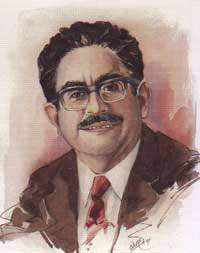
cepeda.jpg, image/jpeg, 200x253

BOGOTA, Jan 24 (IPS) - The Colombian documentary film "El baile rojo" (The Red Dance), competing this week at an international film festival, marks an effort to restore collective memory of an experiment in reconciliation that was erased by blood and fire from the country's political map.

The film's title comes from the name of the extermination operation against the Patriotic Union (UP), a legal leftist movement proposed in 1984 by the FARC guerrillas as a political means to end the civil war.

The documentary, by Yezid Campos, is seeking the "grand reportages" prize at the International Festival of Audiovisual Programmes this week in Biarritz, in southwest France.

The film has testimonies from 25 survivors of nine different incidents, of the 3,000 that were tallied by Reiniciar ('restart'), a non-governmental organisation that is leading the UP's collective petition filed with the Inter-American Commission for Human Rights.

Campos, a Colombian anthropologist and documentarist with no party affiliation, decided to take up the issue "to do something for the country and to express the anguish felt," he told IPS.

"El baile rojo" was screened in mid-December in Bogotá, in conjunction with the presentation of a book of the same title, which contains the complete versions of the testimonies summarised in the hour-long film.

The UP emerged as part of the peace accords reached in March 1984 between the government of Belisario Betancur (1982-1986) and the FARC (Revolutionary Armed Forces of Colombia).

It was to serve as the tool for the country's largest guerrilla force to lay down arms after 20 years of waging war against the state. The UP was intended as the means to shift the insurgents to civilian life and legal political activity.

Amidst an atmosphere of optimism and hope, political leaders promoted the creation of the UP through alliances with regional movements of a range of ideological leanings.

Joining the UP was the Communist Party, which had a national presence, and the guerrillas, who participated in public meetings in which the aims of the UP were explained.

The new political group was successful in its first elections, in 1986, putting 14 of its representatives in Congress, including two FARC commanders. The UP also won 18 seats on 11 regional legislatures, and 335 seats on 187 city and town councils.

That same year, former judge Jaime Pardo Leal, as the UP presidential candidate, won the most votes ever obtained by a party other than the long-standing Liberal and Conservative parties.

But the peace experiment was cut short by the pure and simple elimination of UP militants -- whether through outright massacres, extra-judicial executions or forced disappearances. The UP supporters were also subjected to baseless criminal trials, attempted assassinations and threats of all kinds.

"Death opened the window for obscurity," says Jahel Quiroga, director of Reiniciar, in an interview for the film. Most assassinations occurred in the regions were the UP had greatest electoral support.

Already by late 1986, the death toll was three congressmen, one deputy, 11 city councillors, one judge, 61 political leaders, 69 party activists, 24 guerrillas who supported the truce, and 34 supporters.

The movement's spokespersons repeatedly denounced -- in public and to government agencies -- that members of the armed forces and their allies, the right-wing paramilitaries, were responsible for the assassinations and massacres.

The wave of killings led the FARC to break the truce at the end of 1987. The guerrillas refused to demobilise and withdrew from the UP.

The assassinations continued, and by 1993 Reiniciar had documented 1,163 extra-judicial executions, 1,234 disappearances, 43 failed murder attempts, and 225 people receiving death threats.

UP leader Pardo Leal was murdered in October 1987, and his successor as the party's presidential candidate, Bernardo Jaramillo, met the same fate in March 1990.

The physical dismantling of the UP was so thorough that film director Campos turned up information that is new even to many of the people who were close to the organisation.

In addition to the thousands of people murdered or disappeared, "from the human perspective the people affected number in the millions, if you take into account the family networks and others who suffered personal losses," Campos told IPS.

As recently as 2002 the UP lost its right to participate in elections when the National Electoral Council announced the official annulment of the movement, saying it did not meet the legal requirements of obtaining 50,000 votes and representation in Congress in the previous elections.

But the crimes did not cease. From 2000 through 2003, there were 26 forced disappearances and 89 assassinations of individuals linked to the UP. Of those sums, 30 were killed and 17 disappeared just since Alvaro Uribe took office in August 2002, said Quiroga.

To film "El baile rojo", Campos sought out the UP survivors living in exile in Spain, Sweden and Switzerland, as well as those still in Colombia. In his search for testimonies, he found that many did not want to talk, "others have lost their senses, and still others live in silence, fleeing the terror."

He also confirmed that the response of many UP activists was to turn to insurgency. "I am alive because I joined the guerrillas," a man who goes by the name Andrés París, a student leader from the 1970s, told this correspondent in 2001.

"With many of the rest of the 'compañeros' (current guerrilla commanders), it was the same thing," the guerrilla said.

"It was much worse than I thought, because what I found is practically systematic and planned genocide, and the governments did nothing to stop it. Impunity is almost total," Campos told IPS.

A report by the People's Defender (Ombudsman) documents 717 assassinations of UP members between 1985 and 1992. Only 10 of those cases went to trial, and of those, six ended in acquittals. And the situation of impunity is not any better today.

Campos said that most of the people he interviewed for the documentary "don't want revenge. They want to make sure their pain is not forgotten and, above all, to understand what happened."

"In Colombia we have thousands of dead who are nothing more than a statistic. But they had faces, dreams, families, sorrows. We must recover the memory of the dead. Memory is vital for rebuilding Colombia."

The "holocaust" of the UP is not a problem limited to Colombia, but is a problem for everyone, "because humanity cannot accept that this is happening here. It is an affront" to civilisation, he said.

In "The Red Dance", Campos interviews Eric Sottas, director of the World Organisation Against Torture, who says the intent to annihilate an entire political group is a crime that has not yet been clearly classified at the international level.

The equation we knew, in other words, "that 'democracy' to a certain point meant 'respect for human rights', has not worked in Colombia," where selective assassinations continue to rise, said Sottas.


© 2000-2018 Los Angeles Independent Media Center. Unless otherwise stated by the author, all content is free for non-commercial reuse, reprint, and rebroadcast, on the net and elsewhere. Opinions are those of the contributors and are not necessarily endorsed by the Los Angeles Independent Media Center. Running sf-active v0.9.4 Disclaimer | Privacy