|
|
json version - view hidden posts
View article without comments
by .
Saturday, May. 31, 2003 at 4:55 AM
stoplbpd@yahoo.com
.
HIP HOP 4 JUSTICE
STOP THE FBI! STOP THE INS!
BENEFIT FOR JAVIER PEREZ and SHERMAN AUSTIN (FROM RAISE THE FIST)
Join us for a night of revolutionary hip hop, speakers, open mic, and unity to speak out against the intensified war being waged against our communites here at home by local and federal law enforcement agencies as they continue to harass, brutalize, racially profile, round-up and target and surveill political descendents.
When: June 20th
Where: Casa Del Pueblo (498 W. Sunset Blvd. St#2 , Los Angeles, CA)
Time: 7pm
Suggested Donation: $5
FIGHT CLUB
POOR HOUSE PROJEKTS
LIQDZUNSHINE
DJ CANEO
+ more TBA
Proceeds from the event will go to help Sherman Austin from Raise the Fist who was radied by the FBI under the U.S Patriot Act on Jan 24, 2002 (has sentencing on June 30th, 2003) and for Javier Perez who was deported after being arrested at a brutal police riot in Long Beach on May 1, 2001.
For more info contact: 562-434-6934 / StopLBPD@yahoo.com.
ABSOLUTELY NO DRUGS OR ALCOHOL
www.raisethefist.com
by .
Saturday, May. 31, 2003 at 5:33 AM
the correct contact number is 562-856-1932 , please call anytime after Sat, May 31st.
by daveman
Saturday, May. 31, 2003 at 7:40 PM
Revolutionary hip-hop will make the world a better place!
by anti-moron
Saturday, May. 31, 2003 at 8:04 PM
The world would be a better place if you would jump off a bridge!!!
by in the know
Saturday, May. 31, 2003 at 9:23 PM
I hear Sherman Austin is going up the creek for a while! Don't bend over for the soap! Someone might "Raise the fist" up yo ass, homey!
by daveman
Sunday, Jun. 01, 2003 at 11:39 AM
Death to all who disagree with you! And let's repeal the First Amendment, too, so no one can voice any different opinions!
Anti-moron should rule the world! He is, after all, the wisest human being in all of history...so wise, he makes Solomon look like a regular poster on la-imc.
by Sy$teMF@iLuRe
Monday, Jun. 02, 2003 at 9:17 AM

free-sherman-now.jpg, image/jpeg, 346x216
FREE SHERMAN AUSTIN
VOTE TODAY ! ! !
by Katalyst
Monday, Jun. 02, 2003 at 9:30 AM
How deliciously perfect.
Any else drawing the parallels between the homogenization of hip-hop and "organized" anarchy? Soon all the white surburban kids with their pants around their ankles will be yelling anti-G8 slogans from their parent's 1 mile to the gallon $50k SUVs as they cruise the stripmalls listening to Nelly and Missy Elliot.
Fuckin' classic. Fight the power, brotha'.
by Sy$teMF@iLuRe
Monday, Jun. 02, 2003 at 9:38 AM
Thats a pretty cool statement showing that the rich white kids are starting to understand the plight of less fortunate minorities.
The realization of the youth.
The realization that the can use thier parents corruption and riches to spread the word of global decontrol.
Good point.
The seeds of discontent are spreading thru to all.
The understanding is near.
by Katalyst
Monday, Jun. 02, 2003 at 9:41 AM
Put down the joint.
Turn off The Matrix.
Think about it.
by Sy$teMF@iLuRe
Monday, Jun. 02, 2003 at 9:45 AM
why dont you go home and finish fucking your mother?
by Katalyst
Monday, Jun. 02, 2003 at 9:50 AM
by SF
Monday, Jun. 02, 2003 at 9:51 AM
by Katalyst
Monday, Jun. 02, 2003 at 4:02 PM
kobehq@yahoo.com
I also tongue-kissed her butthole.
www.kobehq.com
by click-clack
Monday, Jun. 02, 2003 at 6:11 PM
every time something is posted on here about raisethefist, you people always come in here with your stupid fucking drama and start your stupid petty little fights as if anyone gives a damn. grow up and find something more productive to do with your time!
by Katalyst
Monday, Jun. 02, 2003 at 6:26 PM
What's less productive, what we do or the fact that you're responding to it?
And if you're going to imp me at least use some grammar. I'm not a "member" of Kobe, but if it makes you feel better to think that, go ahead I guess.
by anti-psycho
Monday, Jun. 02, 2003 at 8:19 PM
You are in need of a Prozac the size of a basketball. Please get back into your straightjacket before you hurt someone, you psycho.
by Katalyst
Monday, Jun. 02, 2003 at 8:29 PM
Someday, maybe, just maybe, someone will stand up and debate the issues instead of attacking the debater.
It's so much easier to say "Katalyst/Bush/G8 is a poo-head." then it is to say why you think they're wrong, isn't it. Heaven forbid you have to, like, uhh, expose some points you might have to defend and stuff, right?
But who cares about the issues.. it's just cool to dress up in black, riot n pretend 2 b smart n stuff rite? FUK BUSH FUK U PSYCHO OK THX BYE
by anti-psycho
Monday, Jun. 02, 2003 at 8:36 PM
"Katalyst/Bush/G8 is a poo-head."
Please stop hallucinating. There is no such sentence anywhere in this thread. Like I said, you need to get back on your meds.
by debate coach
Monday, Jun. 02, 2003 at 8:49 PM
"The left is so incredibly irrelevant in America today."
Unsubstantiated Allegation.
by Bush Admirer
Monday, Jun. 02, 2003 at 8:53 PM
The fact that the left is completely irrelevant today (in American politics) is self evident.
Even you should be able to figure that out debate coach.
I didn't do it to them. They did it to themselves. They did it by taking absurd positions on the issues of the day, such as our interventions in Afghanistan and Iraq.
They are now self-marginalized. They're like Nessie at SF-IMC (irrelevant).
by debate coach
Monday, Jun. 02, 2003 at 8:55 PM
"The fact that the left is completely irrelevant today (in American politics) is self evident."
Unsubstantiated Allegation.
by Eric
Monday, Jun. 02, 2003 at 9:23 PM
Hey BA, have you listened to this garbage yet?:
http://www.killradio.org/proginfo.php?id=66
It's a radio broadcast on KILL Radio with some of the SF IMC Collective members.
It's quite a hoot. Especially part two, where they take caller's questions on the phone.
The thing that most comes to mind are the similarities between these people, and your run-of-the-mill cult.
The brainwashing tactics employed by these people are quite impressive, and nearly undetecable to the untrained ear. It's like "We love you. We accept you for who you are. Come join our click. We have no discernible leadership and we have weekly "concensus training". We'll love you just because you are you."
It's very entertaining. Give it a listen when you get board sometime.
by FOX NEWS
Monday, Jun. 02, 2003 at 9:29 PM
We love you!! Please contribute to our Eric Robert Rudolph defense fund!
by skippy
Monday, Jun. 02, 2003 at 10:31 PM
sorry i do this all the time
its all i got
by Sy$teMF@iLuRe
Tuesday, Jun. 03, 2003 at 9:03 AM
goober@goober.com
WHy ya gotta try and H@cK my email account?
Thats not very nice.....
Looks like some retribution is in order...
H@ hA
Ha HA
see ya soon.........
I ll be X POSING you soon here on indyMeDia
dick.
by Eric
Tuesday, Jun. 03, 2003 at 10:10 AM
Unfortunately for you, I didn't just try. Actually, I did hack it.
But I'll be waiting for you to xpose me (whatever the hell that is supposed to mean).
HAR!
by Sy$teMF@iLuRe
Wednesday, Jun. 04, 2003 at 2:19 AM
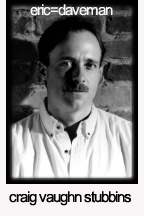
shithead.jpg, image/jpeg, 144x216
daveman/erics IP is.......68.212.64.23
by Sy$teMF@iLuRe
Wednesday, Jun. 04, 2003 at 4:13 AM
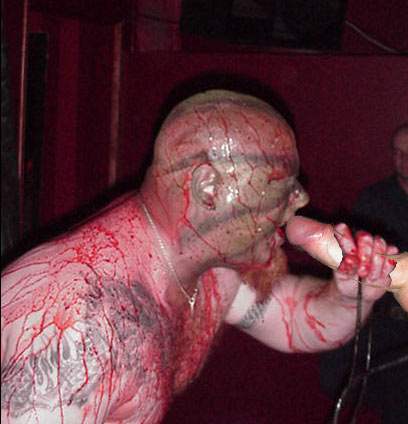
sf.jpg, image/jpeg, 408x424
by Eric
Wednesday, Jun. 04, 2003 at 9:15 AM
Don't quit your day job. You'll never work for the NSA.
The porno is however, unnecessary.
by Eric
Wednesday, Jun. 04, 2003 at 9:44 AM
Or should I say, Enrique Barbeito Garcia?
Hablo un español pequeño, usted idiota. He estado a España muchos, muchas vez. Quizás vendré la visita usted ahora que tengo toda su información. ¿Apreciaría usted eso? ¿Cómo el tiempo en Alicante es? Necesito una vacación también.
That's right goober. You're owned.
by Kobe power
Wednesday, Jun. 04, 2003 at 9:51 AM
bunch of communist squatter fucks!
This website is hosted by queer san fran faggots and nigger lovers.
by KOBEMAN
Wednesday, Jun. 04, 2003 at 10:11 AM
is this the fucking gay pride page or what?
The intellegence here is ???????
WHAT A JOKE!!!!!!!!!!!!!!!!!
ps
Your probally right.
BWAHABWAHAHAHAHAHAHHAHAHAHAHHAHAHAHAHAHHAHAHAHAHHAHAHAHAHAHHAHAH
PSS
WE WON THE WAR ASSHOLES
WAKE THE FUCK UP!!!!!!!!!
by Kobe dog
Wednesday, Jun. 04, 2003 at 10:19 AM
fuck sherman piece of shit
rot in jail you piece of dog shit.
Heres some info for you leftie fucks about the GREATEST president in history.
read it an learn what makes some one a hero.
Birthplace: Milton, Mass.
George Herbert Walker Bush was born June 12, 1924, in Milton, Mass., to Prescott and Dorothy Bush. The family later moved to Connecticut. The youth studied at the elite Phillips Academy in Andover, Mass.
The future president joined the Navy after war broke out and at 18 became the Navy's youngest commissioned pilot, serving from 1942 to 1945. The man later derided by some as a “wimp” fought the Japanese on 58 missions and was shot down once. He won the Distinguished Flying Cross.
After the war, Bush earned an economics degree and a Phi Beta Kappa key in two and a half years at Yale University. While there he captained the baseball team and was initiated into “Skull and Bones,” the prestigious Yale secret society.
In 1945 Bush married Barbara Pierce of Rye, N.Y., daughter of a magazine publisher. With his bride, Bush moved to Texas instead of entering his father's investment banking business. There he founded his oil company and by 1980 reported an estimated wealth of $1.4 million.
Throughout his whole career, Bush had the backing of an established family, headed by his father, Prescott Bush, who was elected to the Senate from Connecticut in 1952. The family helped the young patrician become established in his early business ventures, a rich uncle raising most of the capital required for founding the oil company.
In the 1960s, Bush won two contests for a Texas Republican seat in the House of Representatives, but lost two bids for a Senate seat. After Bush's second race for the Senate, President Nixon appointed him U.S. delegate to the United Nations with the rank of ambassador and he later became Republican National Committee chairman. He headed the U.S. liaison office in Beijing before becoming Director of Central Intelligence.
In 1980 Bush became Reagan's running mate despite earlier criticism of Reagan “voodoo economics” and by the 1984 election had won acclaim for his devotion to Reagan's conservative agenda. Die-hard right-wingers could also find satisfaction in Bush's war record and his government service, particularly with the CIA. Throughout he remained influential in White House decisions, particularly in foreign affairs.
In the 1988 presidential campaign, Bush's choice of Sen. Dan Quayle of Indiana for vice president surprised his friends and provoked criticism and ridicule that continued even after the administration was in office. Nonetheless Bush strongly defended his choice.
George Herbert Walker Bush became president on Jan. 20, 1989, with his theme harmony and conciliation after the often-turbulent Reagan years. With his calm and unassuming manner, he emerged from his subordinate vice-presidential role with an air of quiet authority. His inaugural address emphasized “A new breeze is blowing, and the old bipartisanship must be made new again.”
In his first months, the president, the nation's 41st, established himself as his own man and all but erased memories of what many had regarded as his fiercely abrasive presidential election campaign of 1988 and questionable tactics against his Democratic opponent. People liked his easy style and readiness to compromise even as he remained a staunch conservative, although that readiness had disconcerted some conservatives.
Bush's early Cabinet choices reflected a pragmatic desire for an efficient, nonideological government. And with his usual cautious instinct, in 1990 he nominated to the Supreme Court the scholarly David H. Souter, with broadly conservative views. Souter was confirmed without a bruising battle.
In his first year, Bush, a World War II hero, had won plaudits at home and abroad for his confident, competent conduct at the NATO 40th anniversary summit meeting in Brussels, the Paris economic conference, on his tour of Eastern Europe, and at the Malta conference with Gorbachev. Grave challenges in that year were the Lebanese hostage crisis and the ongoing war against drug trafficking.
Domestically, Bush had to cope with such issues as the Exxon Valdez oil spill in Alaska and the dispute over flag-burning restrictions, which was resolved, if only for a time, in mid-1990.
But in his second year, 1990, the president confronted a mounting array of problems, chief among them the staggering budget deficit and the savings and loan crisis. The president's popularity dipped sharply from its near-record public approval following the invasion of Panama in late 1989. This plunge followed Bush's recantation of his campaign “no new taxes” pledge as he sat down with congressional leaders to tame the budget deficit and deal with a faltering economy.
In 1991, the president emerged as the leader of an international coalition of Western democracies, Japan, and even some Arab states that came together to free Kuwait following an invasion of the country by Iraq in Aug. 1990. The coalition forces defeated Iraq in only a little more than a month after Operation Desert Storm was launched on Jan. 16–17, 1991, and a nation grateful at feeling the end of the “Vietnam syndrome” gave the president an 89% approval rating. However, the high rating fell as the year went on, as doubts persisted about the war's outcome—Iraqi president Saddam Hussein remained in power and persistently avoided complying with the terms of the peace treaty—and as concerns began to grow about the faltering U.S. economy and other domestic problems.
A major Bush accomplishment in 1991 was the Strategic Arms Reduction Treaty (START), signed in July with Soviet president Mikhail S. Gorbachev at their fourth summit conference, marking the end of the long weapons buildup.
The year also saw the president undergoing treatment for Graves' disease, a thyroid disorder, from which he suffered serious side effects.
In the 1992 presidential election, Bush was defeated by Gov. Bill Clinton of Arkansas.
The Bushes have four sons, George, Jeb, Neil, and Marvin, and a daughter, Dorothy. Another daughter, Robin, died at age three from leukemia. Son George served as governor of Texas from 1995 to 2000, when he was elected the 43rd U.S. president. Jeb Bush was elected governor of Florida in 1998
GO GW!!!!!!!!!!!!!!!!!!!!
Birthplace: Milton, Mass.
George Herbert Walker Bush was born June 12, 1924, in Milton, Mass., to Prescott and Dorothy Bush. The family later moved to Connecticut. The youth studied at the elite Phillips Academy in Andover, Mass.
The future president joined the Navy after war broke out and at 18 became the Navy's youngest commissioned pilot, serving from 1942 to 1945. The man later derided by some as a “wimp” fought the Japanese on 58 missions and was shot down once. He won the Distinguished Flying Cross.
After the war, Bush earned an economics degree and a Phi Beta Kappa key in two and a half years at Yale University. While there he captained the baseball team and was initiated into “Skull and Bones,” the prestigious Yale secret society.
In 1945 Bush married Barbara Pierce of Rye, N.Y., daughter of a magazine publisher. With his bride, Bush moved to Texas instead of entering his father's investment banking business. There he founded his oil company and by 1980 reported an estimated wealth of $1.4 million.
Throughout his whole career, Bush had the backing of an established family, headed by his father, Prescott Bush, who was elected to the Senate from Connecticut in 1952. The family helped the young patrician become established in his early business ventures, a rich uncle raising most of the capital required for founding the oil company.
In the 1960s, Bush won two contests for a Texas Republican seat in the House of Representatives, but lost two bids for a Senate seat. After Bush's second race for the Senate, President Nixon appointed him U.S. delegate to the United Nations with the rank of ambassador and he later became Republican National Committee chairman. He headed the U.S. liaison office in Beijing before becoming Director of Central Intelligence.
In 1980 Bush became Reagan's running mate despite earlier criticism of Reagan “voodoo economics” and by the 1984 election had won acclaim for his devotion to Reagan's conservative agenda. Die-hard right-wingers could also find satisfaction in Bush's war record and his government service, particularly with the CIA. Throughout he remained influential in White House decisions, particularly in foreign affairs.
In the 1988 presidential campaign, Bush's choice of Sen. Dan Quayle of Indiana for vice president surprised his friends and provoked criticism and ridicule that continued even after the administration was in office. Nonetheless Bush strongly defended his choice.
George Herbert Walker Bush became president on Jan. 20, 1989, with his theme harmony and conciliation after the often-turbulent Reagan years. With his calm and unassuming manner, he emerged from his subordinate vice-presidential role with an air of quiet authority. His inaugural address emphasized “A new breeze is blowing, and the old bipartisanship must be made new again.”
In his first months, the president, the nation's 41st, established himself as his own man and all but erased memories of what many had regarded as his fiercely abrasive presidential election campaign of 1988 and questionable tactics against his Democratic opponent. People liked his easy style and readiness to compromise even as he remained a staunch conservative, although that readiness had disconcerted some conservatives.
Bush's early Cabinet choices reflected a pragmatic desire for an efficient, nonideological government. And with his usual cautious instinct, in 1990 he nominated to the Supreme Court the scholarly David H. Souter, with broadly conservative views. Souter was confirmed without a bruising battle.
In his first year, Bush, a World War II hero, had won plaudits at home and abroad for his confident, competent conduct at the NATO 40th anniversary summit meeting in Brussels, the Paris economic conference, on his tour of Eastern Europe, and at the Malta conference with Gorbachev. Grave challenges in that year were the Lebanese hostage crisis and the ongoing war against drug trafficking.
Domestically, Bush had to cope with such issues as the Exxon Valdez oil spill in Alaska and the dispute over flag-burning restrictions, which was resolved, if only for a time, in mid-1990.
But in his second year, 1990, the president confronted a mounting array of problems, chief among them the staggering budget deficit and the savings and loan crisis. The president's popularity dipped sharply from its near-record public approval following the invasion of Panama in late 1989. This plunge followed Bush's recantation of his campaign “no new taxes” pledge as he sat down with congressional leaders to tame the budget deficit and deal with a faltering economy.
In 1991, the president emerged as the leader of an international coalition of Western democracies, Japan, and even some Arab states that came together to free Kuwait following an invasion of the country by Iraq in Aug. 1990. The coalition forces defeated Iraq in only a little more than a month after Operation Desert Storm was launched on Jan. 16–17, 1991, and a nation grateful at feeling the end of the “Vietnam syndrome” gave the president an 89% approval rating. However, the high rating fell as the year went on, as doubts persisted about the war's outcome—Iraqi president Saddam Hussein remained in power and persistently avoided complying with the terms of the peace treaty—and as concerns began to grow about the faltering U.S. economy and other domestic problems.
A major Bush accomplishment in 1991 was the Strategic Arms Reduction Treaty (START), signed in July with Soviet president Mikhail S. Gorbachev at their fourth summit conference, marking the end of the long weapons buildup.
The year also saw the president undergoing treatment for Graves' disease, a thyroid disorder, from which he suffered serious side effects.
In the 1992 presidential election, Bush was defeated by Gov. Bill Clinton of Arkansas.
The Bushes have four sons, George, Jeb, Neil, and Marvin, and a daughter, Dorothy. Another daughter, Robin, died at age three from leukemia. Son George served as governor of Texas from 1995 to 2000, when he was elected the 43rd U.S. president. Jeb Bush was elected governor of Florida in 1998
by Kobe power
Wednesday, Jun. 04, 2003 at 10:23 AM
see ya and raise ya one
Raise?
Raise the middle finger
BWAHAHAHAH
[INLINE] Issue 402
[INLINE] Student Bill Clinton 'spied' on Americans abroad for CIA
A new book alleges that Bill Clinton spent his Oxford days monitoring
anti-Vietnam war activists for the CIA, Ambrose Evans-Pritchard reports
from Washington
WHEN Bill Clinton ran for the US presidency four years ago, Republicans
tried to prove that, as a student, he burnt the Stars and Stripes in
protest at the Vietnam War.
Now Dr Roger Morris, author of an astonishing new book called Partners
in Power, claims that, in the late 1960s, Mr Clinton worked as a source
for the Central Intelligence Agency. So, was the young Clinton a patriot
or just an opportunist? He was certainly no dangerous radical. "No
attack by his reactionary opponents would be more undeserved than the
charge that young Bill Clinton was 'radical'," concludes Morris.
According to the book, the bearded, dishevelled Rhodes scholar was
recruited by the CIA while at Oxford - along with several other young
Americans with political aspirations - to keep tabs on fellow students
involved in protest activities against the Vietnam War. Morris says that
the young Clinton indulged in some low-level spying in Norway in 1969,
visiting the Oslo Peace Institute and submitting a CIA informant's
report on American peace activists who had taken refuge in Scandinavia
to avoid the draft. "An officer in the CIA station in Stockholm
confirmed that," said Morris.
The Washington Establishment would like to dismiss this troubling book
as the work of a fevered conspiracy theorist. But Morris is no
lightweight. He worked at the White House in both the Johnson and Nixon
administrations, resigning from the National Security Council in 1970 in
protest over the US invasion of Cambodia. He went on to become an
acclaimed biographer of Richard Nixon.
Rhodes scholars such as Mr Clinton were favourite targets for
recruitment
As a member of America's tight-knit association of retired intelligence
officers, he has access to highly privileged information. "It's an
incredible network," he explained. "They pass you along from source to
source."
The CIA started recruiting campus informants under President Lyndon
Johnson when he demanded hard proof that there were, in his words,
"commie money and organisers behind this student s***". The programme,
known as Operation Chaos, would offer informants a wide range of
inducements: a little cash on the side; taking care of their draft
problems; and promises of future help. "You know, if the agency's in a
position to help at some point in their careers, there'd be an
institutional memory," explained one CIA officer. "They knew the
advantages of helping out."
Rhodes scholars such as Mr Clinton were favourite targets for
recruitment. This caused serious friction with Britain's MI5 because it
violated a US-UK agreement that neither country would conduct covert
operations or recruit on each other's home territory. "Because of the
sensitivity of the UK, these kids were treated in some ways like
high-level agents," recalled one officer.
In the mid-1970s the CIA shredded its archives on Operation Chaos. One
of those involved in the purge of the records told Morris that he had
seen Bill Clinton listed as a former informant who went on to run for
political office. "He was there in the records, with a special
designation," the official is quoted as saying in the book.
Mr Clinton's alleged ties to the CIA would explain some later episodes
during his tenure as Governor of Arkansas, when his state became a
staging-point for President Ronald Reagan's secret effort to supply the
Nicaraguan Contra rebels. An Arkansas State Trooper, L. D. Brown, has
testified in a deposition that he was inducted into the CIA on Mr
Clinton's suggestion, and then went on two clandestine flights to
deliver weapons to Central America.
Mr Clinton was even commended for his "patriotic" work by the Reagan
White House after he had sent the Arkansas National Guard to Honduras
for manoeuvres. The deployment was a ruse by the Pentagon, according to
Morris. The Arkansas Guard left its "excess" inventory behind, providing
a cache of weapons that were slipped to the Contras.
The point is not that Bill and Hillary Clinton are Right-wingers in
disguise . It is that they have no conviction, no ideology, no guiding
purpose
Even Hillary Clinton was a Cold Warrior of sorts. Described in Morris's
book as "a closet Contra supporter", she quietly aided Contra
fund-raising in Little Rock. She also used her influence in US liberal
circles to undercut the legitimacy of peace activists and pro-Sandinista
church groups opposed to President Reagan's policies in Central America.
The point is not that Bill and Hillary Clinton are Right-wingers in
disguise - although Morris demolishes the pretence that they were
progressive reformers in Arkansas. It is that they have no conviction,
no ideology, no guiding purpose. Driven by raw ambition, they will make
any compromise necessary to advance their interests.
Partners in Power is the first of what will be a succession of books
about the Clintons whose authors are not fooled by the shadow-boxing
that often passes for substantive debate in American politics. (A second
book, by the editor of the American Spectator, will be coming out later
this month with another set of revelations.)
Morris violates all the taboos. Impatient with the manicured myth that
Bill Clinton was the apple-pie boy from Hope, Arkansas, he reveals the
little-known fact that the President spent much of his childhood in Hot
Springs, the capital of gambling, drug-smuggling and organised crime in
the central United States, where his powerful uncle and mentor, Raymond
Clinton, was a member of the Dixie mafia.
It was not Mr Clinton's fault, of course, that he grew up in the culture
of "the Mob". But it is central to understanding who Bill Clinton really
is. It helps explain why his brother, Roger, ended up as a convicted
drug dealer, and why Bill himself allegedly became a regular user of
cocaine. (On a police surveillance videotape quoted from in the book,
Roger can be heard saying to a supplier of cocaine: "Got to get some for
my brother. He's got a nose like a vacuum cleaner.")
For Morris, ensconced in his New Mexico mountain retreat, the American
political system is now fatally corrupted. Democrats and Republicans
noisily dispute how many angels can fit on the head of a pin. But both
are indentured servants of the permanent government - "a bureaucracy so
self-corrupted it is unfit for democracy" - and the interlocking
interests of the lobby machine to be found on Washington's K Street.
It already looks as if the US media will try to ignore Partners in
Power, which is to be published next week. "Their reaction is entirely
predictable," said Morris. "If they were to behave any other way, my
book would not be true."
This report appeared in the last edition of The Sunday Telegraph
Reply to Electronic Telegraph
Electronic Telegraph is a Registered Service Mark of The Telegraph plc
-> Send "subscribe snetnews" to majordomo@alterzone.com
-> Posted by: Brian Redman <bigred@duracef.shout.net>
==================================================================
* Patriot Information Mailing List
* http://www.constitution.org/piml/piml.htm
* A service to help inform those who have an active interest in
* returning our federal and state governments to limited,
* constitutional government
* Send messages for consideration and possible posting to
* butterb@sagenet.net (Bill Utterback).
* To subscribe or unsubscribe, send message with subject line
* "subscribe patriot" or "unsubscribe patriot"
* Forwarded messages sent on this mailing list are NOT verified.
* See World's Smallest Political Quiz: www.self-gov.org/quiz.html
* Libertarian is to LIBERTY as librarian is to library (DePena)
* PIML grants permission to copy and repost this message
* in its entirety with headers and trailers left intact.
[INLINE] Issue 402
[INLINE] Student Bill Clinton 'spied' on Americans abroad for CIA
A new book alleges that Bill Clinton spent his Oxford days monitoring
anti-Vietnam war activists for the CIA, Ambrose Evans-Pritchard reports
from Washington
WHEN Bill Clinton ran for the US presidency four years ago, Republicans
tried to prove that, as a student, he burnt the Stars and Stripes in
protest at the Vietnam War.
Now Dr Roger Morris, author of an astonishing new book called Partners
in Power, claims that, in the late 1960s, Mr Clinton worked as a source
for the Central Intelligence Agency. So, was the young Clinton a patriot
or just an opportunist? He was certainly no dangerous radical. "No
attack by his reactionary opponents would be more undeserved than the
charge that young Bill Clinton was 'radical'," concludes Morris.
According to the book, the bearded, dishevelled Rhodes scholar was
recruited by the CIA while at Oxford - along with several other young
Americans with political aspirations - to keep tabs on fellow students
involved in protest activities against the Vietnam War. Morris says that
the young Clinton indulged in some low-level spying in Norway in 1969,
visiting the Oslo Peace Institute and submitting a CIA informant's
report on American peace activists who had taken refuge in Scandinavia
to avoid the draft. "An officer in the CIA station in Stockholm
confirmed that," said Morris.
The Washington Establishment would like to dismiss this troubling book
as the work of a fevered conspiracy theorist. But Morris is no
lightweight. He worked at the White House in both the Johnson and Nixon
administrations, resigning from the National Security Council in 1970 in
protest over the US invasion of Cambodia. He went on to become an
acclaimed biographer of Richard Nixon.
Rhodes scholars such as Mr Clinton were favourite targets for
recruitment
As a member of America's tight-knit association of retired intelligence
officers, he has access to highly privileged information. "It's an
incredible network," he explained. "They pass you along from source to
source."
The CIA started recruiting campus informants under President Lyndon
Johnson when he demanded hard proof that there were, in his words,
"commie money and organisers behind this student s***". The programme,
known as Operation Chaos, would offer informants a wide range of
inducements: a little cash on the side; taking care of their draft
problems; and promises of future help. "You know, if the agency's in a
position to help at some point in their careers, there'd be an
institutional memory," explained one CIA officer. "They knew the
advantages of helping out."
Rhodes scholars such as Mr Clinton were favourite targets for
recruitment. This caused serious friction with Britain's MI5 because it
violated a US-UK agreement that neither country would conduct covert
operations or recruit on each other's home territory. "Because of the
sensitivity of the UK, these kids were treated in some ways like
high-level agents," recalled one officer.
In the mid-1970s the CIA shredded its archives on Operation Chaos. One
of those involved in the purge of the records told Morris that he had
seen Bill Clinton listed as a former informant who went on to run for
political office. "He was there in the records, with a special
designation," the official is quoted as saying in the book.
Mr Clinton's alleged ties to the CIA would explain some later episodes
during his tenure as Governor of Arkansas, when his state became a
staging-point for President Ronald Reagan's secret effort to supply the
Nicaraguan Contra rebels. An Arkansas State Trooper, L. D. Brown, has
testified in a deposition that he was inducted into the CIA on Mr
Clinton's suggestion, and then went on two clandestine flights to
deliver weapons to Central America.
Mr Clinton was even commended for his "patriotic" work by the Reagan
White House after he had sent the Arkansas National Guard to Honduras
for manoeuvres. The deployment was a ruse by the Pentagon, according to
Morris. The Arkansas Guard left its "excess" inventory behind, providing
a cache of weapons that were slipped to the Contras.
The point is not that Bill and Hillary Clinton are Right-wingers in
disguise . It is that they have no conviction, no ideology, no guiding
purpose
Even Hillary Clinton was a Cold Warrior of sorts. Described in Morris's
book as "a closet Contra supporter", she quietly aided Contra
fund-raising in Little Rock. She also used her influence in US liberal
circles to undercut the legitimacy of peace activists and pro-Sandinista
church groups opposed to President Reagan's policies in Central America.
The point is not that Bill and Hillary Clinton are Right-wingers in
disguise - although Morris demolishes the pretence that they were
progressive reformers in Arkansas. It is that they have no conviction,
no ideology, no guiding purpose. Driven by raw ambition, they will make
any compromise necessary to advance their interests.
Partners in Power is the first of what will be a succession of books
about the Clintons whose authors are not fooled by the shadow-boxing
that often passes for substantive debate in American politics. (A second
book, by the editor of the American Spectator, will be coming out later
this month with another set of revelations.)
Morris violates all the taboos. Impatient with the manicured myth that
Bill Clinton was the apple-pie boy from Hope, Arkansas, he reveals the
little-known fact that the President spent much of his childhood in Hot
Springs, the capital of gambling, drug-smuggling and organised crime in
the central United States, where his powerful uncle and mentor, Raymond
Clinton, was a member of the Dixie mafia.
It was not Mr Clinton's fault, of course, that he grew up in the culture
of "the Mob". But it is central to understanding who Bill Clinton really
is. It helps explain why his brother, Roger, ended up as a convicted
drug dealer, and why Bill himself allegedly became a regular user of
cocaine. (On a police surveillance videotape quoted from in the book,
Roger can be heard saying to a supplier of cocaine: "Got to get some for
my brother. He's got a nose like a vacuum cleaner.")
For Morris, ensconced in his New Mexico mountain retreat, the American
political system is now fatally corrupted. Democrats and Republicans
noisily dispute how many angels can fit on the head of a pin. But both
are indentured servants of the permanent government - "a bureaucracy so
self-corrupted it is unfit for democracy" - and the interlocking
interests of the lobby machine to be found on Washington's K Street.
It already looks as if the US media will try to ignore Partners in
Power, which is to be published next week. "Their reaction is entirely
predictable," said Morris. "If they were to behave any other way, my
book would not be true."
This report appeared in the last edition of The Sunday Telegraph
Reply to Electronic Telegraph
Electronic Telegraph is a Registered Service Mark of The Telegraph plc
-> Send "subscribe snetnews" to majordomo@alterzone.com
-> Posted by: Brian Redman <bigred@duracef.shout.net>
==================================================================
* Patriot Information Mailing List
* http://www.constitution.org/piml/piml.htm
* A service to help inform those who have an active interest in
* returning our federal and state governments to limited,
* constitutional government
* Send messages for consideration and possible posting to
* butterb@sagenet.net (Bill Utterback).
* To subscribe or unsubscribe, send message with subject line
* "subscribe patriot" or "unsubscribe patriot"
* Forwarded messages sent on this mailing list are NOT verified.
* See World's Smallest Political Quiz: ww
by KOBEMAN
Wednesday, Jun. 04, 2003 at 10:32 AM
great work
fuck this place...i cant take it for too long
smells like scummy squatter fucks
by Que?
Wednesday, Jun. 04, 2003 at 11:27 AM
A truck load of spam. Hmmmmm.
Good one, systemfailure, so watch your back, amigo.
by Green Momba
Wednesday, Jun. 04, 2003 at 12:53 PM

shithead.jpglgsajq.jpg, image/jpeg, 144x216
Looks a bit like Adolph, doesn't it?
by Eric
Wednesday, Jun. 04, 2003 at 1:26 PM
But for the record, that's not me.
by Eric
Wednesday, Jun. 04, 2003 at 3:21 PM
I did not submit the above comment.
by Diogenes
Wednesday, Jun. 04, 2003 at 4:12 PM
better jump ahead and stomp me faker
by Katalyst
Wednesday, Jun. 04, 2003 at 4:14 PM
"Stomp" you? Does that have anything to do with scat? If so, I'm your man!
by Spackel
Wednesday, Jun. 04, 2003 at 11:03 PM
by Eric
Friday, Jun. 06, 2003 at 4:26 PM
|


