Los Angeles Indymedia : Activist News
| About Us | Contact Us | Calendar | Publish | RSS |
|---|
|
Features • latest news • best of news • syndication • commentary Feature Categories IMC Network:
Original Citieswww.indymedia.org africa: ambazonia canarias estrecho / madiaq kenya nigeria south africa canada: hamilton london, ontario maritimes montreal ontario ottawa quebec thunder bay vancouver victoria windsor winnipeg east asia: burma jakarta japan korea manila qc europe: abruzzo alacant andorra antwerpen armenia athens austria barcelona belarus belgium belgrade bristol brussels bulgaria calabria croatia cyprus emilia-romagna estrecho / madiaq euskal herria galiza germany grenoble hungary ireland istanbul italy la plana liege liguria lille linksunten lombardia london madrid malta marseille nantes napoli netherlands nice northern england norway oost-vlaanderen paris/Île-de-france patras piemonte poland portugal roma romania russia saint-petersburg scotland sverige switzerland thessaloniki torun toscana toulouse ukraine united kingdom valencia latin america: argentina bolivia chiapas chile chile sur cmi brasil colombia ecuador mexico peru puerto rico qollasuyu rosario santiago tijuana uruguay valparaiso venezuela venezuela oceania: adelaide aotearoa brisbane burma darwin jakarta manila melbourne perth qc sydney south asia: india mumbai united states: arizona arkansas asheville atlanta austin baltimore big muddy binghamton boston buffalo charlottesville chicago cleveland colorado columbus dc hawaii houston hudson mohawk kansas city la madison maine miami michigan milwaukee minneapolis/st. paul new hampshire new jersey new mexico new orleans north carolina north texas nyc oklahoma philadelphia pittsburgh portland richmond rochester rogue valley saint louis san diego san francisco san francisco bay area santa barbara santa cruz, ca sarasota seattle tampa bay tennessee urbana-champaign vermont western mass worcester west asia: armenia beirut israel palestine process: fbi/legal updates mailing lists process & imc docs tech volunteer projects: print radio satellite tv video regions: oceania united states topics: biotechSurviving Citieswww.indymedia.org africa: canada: quebec east asia: japan europe: athens barcelona belgium bristol brussels cyprus germany grenoble ireland istanbul lille linksunten nantes netherlands norway portugal united kingdom latin america: argentina cmi brasil rosario oceania: aotearoa united states: austin big muddy binghamton boston chicago columbus la michigan nyc portland rochester saint louis san diego san francisco bay area santa cruz, ca tennessee urbana-champaign worcester west asia: palestine process: fbi/legal updates process & imc docs projects: radio satellite tv |
json version - view hidden posts
View article without comments Showdown Iraqby CNNNN Tuesday, Dec. 03, 2002 at 6:31 AMOpinion Poll
CNNNN Market Research your taxes at workby killing for fun and profit Tuesday, Dec. 03, 2002 at 4:40 PM
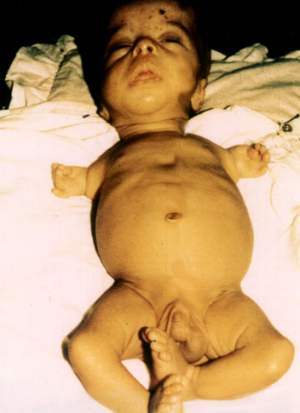
[a gulf war veteran's delpeted uranium child] =================================== "We do not have any defence treaties with Kuwait, and there are no special defence or security commitments to Kuwait." - Margaret Tutweiller, US State Department spokeswoman, 24th July 1990, nine days before Iraq's invasion of Kuwait ~~~~~~~~~~~~~~~~~ July 25, 1990 - Presidential Palace - Baghdad U.S. Ambassador Glaspie - I have direct instructions from President Bush to improve our relations with Iraq. We have considerable sympathy for your quest for higher oil prices, the immediate cause of your confrontation with Kuwait. (pause) As you know, I lived here for years and admire your extraordinary efforts to rebuild your country. We know you need funds. We understand that, and our opinion is that you should have the opportunity to rebuild your country. (pause) We can see that you have deployed massive numbers of troops in the south. Normally that would be none of our business, but when this happens in the context of your threats against Kuwait, then it would be reasonable for us to be concerned. For this reason, I have received an instruction to ask you, *in the spirit of friendship - not confrontation* - regarding your intentions: Why are your troops massed so very close to Kuwait's borders? Saddam Hussein - As you know, for years now I have made every effort to reach a settlement on our dispute with Kuwait. There is to be a meeting in two days; I am prepared to give negotiations only this one more brief chance. (pause) When we (the Iraqis) meet (with the Kuwaitis) and we see there is hope, then nothing will happen. But if we are unable to find a solution, then it will be natural that Iraq will not accept death. U.S. Ambassador Glaspie - What solutions would be acceptable? Saddam Hussein - If we could keep the whole of the Shatt al Arab - our strategic goal in our war with Iran - we will make concessions (to the Kuwaitis). But, if we are forced to choose between keeping half of the Shatt and *the whole of Iraq* (i.e., in Saddam s view, including Kuwait) then we will give up all of the Shatt to defend our claims on Kuwait to keep the whole of Iraq *in the shape we wish it to be*. (pause) What is the United States' opinion on this? U.S. Ambassador Glaspie - We have NO OPINION on your Arab - Arab conflicts, *such as your dispute with Kuwait*. Secretary (of State James) Baker has directed me to EMPHASHIZE THE INSTRUCTION, first given to Iraq in the 1960's, that THE KUWAIT ISSUE IS NOT ASSOCIATED WITH AMERICA. On August 2, 1990 **four days later**, Saddam's massed troops invade and occupy Kuwait. _____ ~~~~~~~~~~~~~~~~~ HAMILTON: "Do we have a commitment to our friends in the Gulf in the event that they are engaged in oil or territorial disputes with their neighbours?" KELLY: "As I said, Mr. Chairman, we have no defence treaty relationships with any of the countries. We have historically avoided taking a position on border disputes or on internal OPEC deliberations, but we certainly, as have all administrations, resoundingly called for the peaceful settlement of disputes and differences in the area." HAMILTON: "If Iraq, for example, charged across the border into Kuwait, for whatever reason, what would be our position with regard to the use of US forces?" KELLY: "That, Mr. Chairman, is a hypothetical or a contingency, the kind of which I can't get into. Suffice it to say, we would be extremely concerned, but I can not get into the realm of 'what if...' answers." HAMILTON: "In that circumstance, is it correct to say, however, that we do not have a treaty commitment which would obligate us to engage US forces?" KELLY: "That is correct." - Question and answer session between US Assistant Secretary of State for Near Eastern Affairs John Kelly and Representative Lee Hamilton, July 31st 1990, **two days** before the invasion. French researcher Pierre Salinger claimed in his 1991 book 'Secret Dossier - The Hidden Agenda behind the Gulf War' that this exchange was broadcast on the BBC World Service and heard in Iraq. ~~~~~~~~~~~~~~~~~ "Obviously, I didn't think, and nobody else did, that the Iraqis were going to take ALL of Kuwait." - April Glaspie, accidentally revealing US compicity, New York Times, 20th September 1990, seven weeks after the invasion ~~~~~~~~~~~~~~~~~ "We have only friendship for the people in Iraq." - George Bush, November 1990 ~~~~~~~~~~~~~~~~~ "In every city we visited, we documented severe damage to homes, electrical plants, fuel storage facilities, civilian factories, hospitals, churches, civilian airports, vehicles, transportation facilities, food storage and food testing laboratories, grain silos, animal vaccination centres, schools, communication towers, civilian government office buildings, and stores. Almost all facilities we saw had been bombed two or three times, ensuring that they could not be repaired. Most of the bridges we saw had been bombed from both ends." - Adeeb Abed and Gavrielle Gemma, Independent Commission of Inquiry staff members, fact find finding trip to Iraq, April 3rd-14th 1991 ~~~~~~~~~~~~~~~~~ "We will not hesitate to use force if necessary…..[but the West]…has no quarrel with the Iraqi people. They have suffered enough." - Douglas Hurd, British Secretary of State for Foreign and Commonwealth Affairs, June 1993 ~~~~~~~~~~~~~~~~~ "They [the Iraqis] have done an excellent job. Our commission is convinced it’s all over. It is watertight. We have faith in the work we have done." - Jaako Ylitalo, Chief UNSCOM field officer in Baghdad, 13th October 1994 ~~~~~~~~~~~~~~~~~ Stahl: "The question is, are they [sanctions] missing the mark? ….We have heard that HALF A MILLION CHILDREN HAVE DIED. I mean, this is more children than died in Hiroshima. Is the price worth it?’ Albright: "This is a very hard choice, but the price….we think the price is worth it." - Interviewer Leslie Stahl questions Madeleine Albright, CBS Television ’60 Minutes’, 12th May 1996 ~~~~~~~~~~~~~~~~~ We are not saying Saddam is totally respectful of human rights, but he is the one who is supporting us. Saddam is better than the UN and he is much better than Turkey." - Ahmet Vurgun, Kurdish refugee crossing to the border from Turkey into Iraq to seek sanctuary, as witnessed by the UN High Commissioner for Refugess, May 1997 ~~~~~~~~~~~~~~~~~ "I am willing to make a bet to anyone here that we care more about the Iraqi people than Saddam Hussein does." - Madeleine Albright, open meeting in Town Hall, Columbus, Ohio, 18th February 1998. Over a million Iraqis had died from sanctions and bombing at the time of her statement. ~~~~~~~~~~~~~~~~~ "They know WE own THEIR country. WE own THEIR airspace... WE dictate the way THEY live and talk. And that's what's great about America right now. It's a GOOD thing, especially when there is a lot of OIL out there we need." - Air Force Brigadier General William Looney, head of the US Central Command's Airborne Expeditionary Force, quoted in US Defence Week, November 1998 ~~~~~~~~~~~~~~~~~ |